

You've finished the stair run, aligned the posts, tensioned the cable, and applied the final coat to the handrail. Then you notice the open tube ends. The black handrail end caps looked like a small purchasing detail, so they were left until the end, when the cap options on screen all appeared almost identical.
That's where many otherwise careful railing installations lose quality. The wrong internal fit leaves a loose cap, a mismatched finish exposes the termination to moisture, and a sharp or projecting edge creates a safety problem. A black handrail end cap is the last visible piece of the system, but it also acts as a final check on sizing, preparation, material compatibility, and safe termination.
Table of Contents
- Why the Last Inch of a Handrail Matters
- How to Measure for Black Handrail End Caps
- Choosing Materials and Finishes That Last
- Installing End Caps for a Clean and Safe Termination
- Low-Maintenance Care for Black Metal Railings
- Quick Guidance for Common Black Railing Decisions
Why the Last Inch of a Handrail Matters
On a real job site, the cap is installed after most of the work feels complete. The stair framing is finished, posts are plumb, the rail has been cut, and the surrounding surfaces are clean. An open tube end can sit there for days because it doesn't stop the rest of the project from moving forward. That delay is harmless only if the end is later measured, prepared, capped, and checked properly.
The termination affects more than appearance. UK and North American building-code guidance commonly requires handrails to end safely by returning to a wall, guard, post, or safety terminal. A summary of handrail termination requirements notes that IRC 2000 required ends to return or terminate in newel posts or safety terminals, while BC guidance treats an end cap as safe when it doesn't obstruct pedestrian travel. The underlying purpose is straightforward: remove exposed sharp ends, reduce snag hazards, and preserve a safe, continuous handhold.
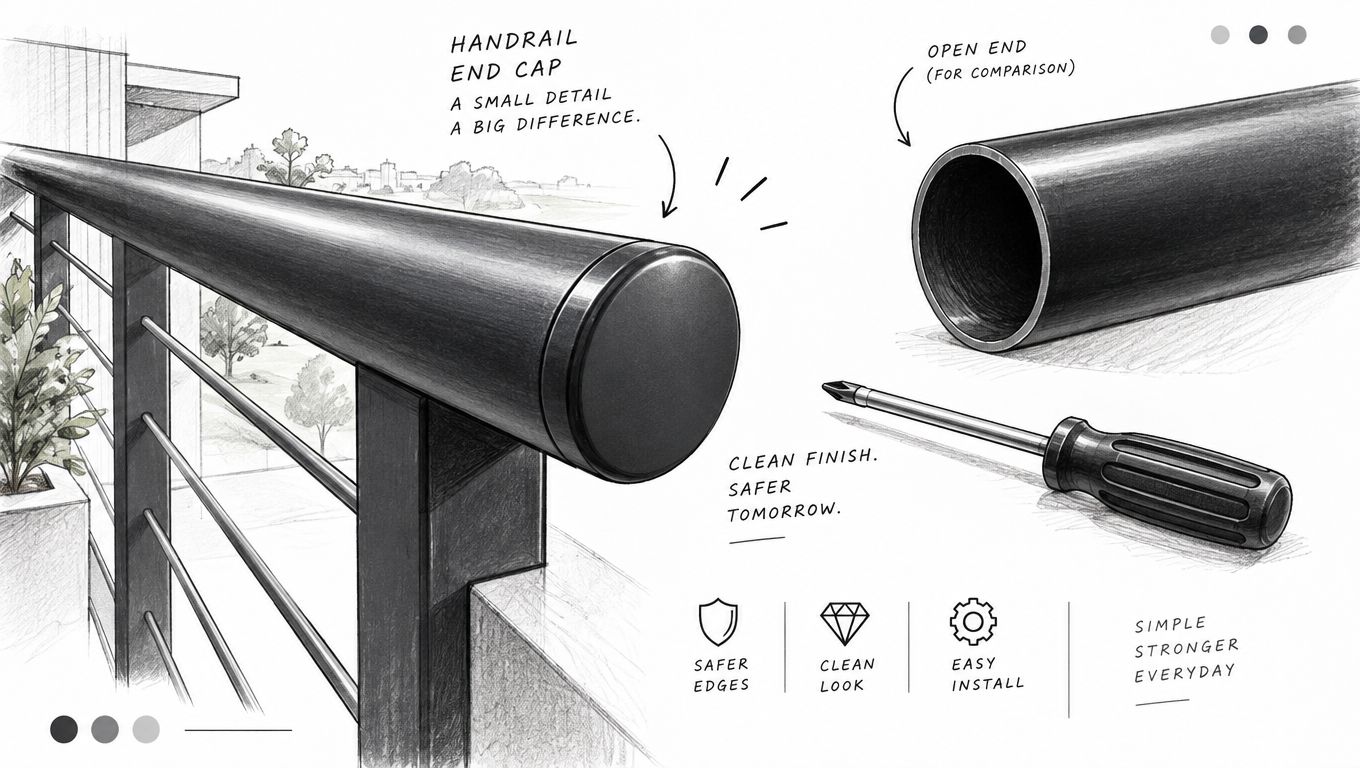
The cap is a quality-control point
The end cap also reveals whether the installer treated the railing as a complete assembly. A black cap that matches the rail's sheen makes the termination look intentional. One with a different black tone, uneven seating, or a visible gap makes the whole system look improvised.
The exposed edge deserves attention because it receives handling, cleaning, weather, and occasional impact. If the coating is damaged there, moisture can reach the base metal. The cap won't repair a badly cut tube, and it won't compensate for a railing system that wasn't checked against local requirements.
Practical rule: Treat the end cap as the final inspection point, not as a decorative plug added after the inspection is over.
The modern code history matters because safe termination has been emphasized as model codes were harmonized. Major US code organizations began unifying their standards under the ICC in 1999 and officially merged in 2002, as noted in the same building-code history and guidance. For a contractor, the useful conclusion isn't the date itself. It's that the cap must support the intended termination, eliminate a dangerous projection, and suit the handrail's actual use.
How to Measure for Black Handrail End Caps
A catalog photograph won't tell you whether a cap fits. Measure the tube, then compare the measured profile with the cap's stated dimensions and retention method. This is important because black caps are available for round, square, and rectangular rails, and small differences in outside diameter or internal clearance can separate a secure fit from a part that rocks in the opening.
Start with the tube shape. For a round handrail, measure the outside diameter across the widest point, preferably with calipers. For square or rectangular tubing, measure both outside dimensions and record the wall thickness if it's available on the fabrication drawing. A cap that matches the outside width but has the wrong internal depth may bottom out before its shoulder reaches the tube, while one with excessive clearance can loosen as the adhesive ages.
Read the specification, not just the product photo
Independent listings show black end-cap variants associated with 42.4 mm, 48.3 mm, 40 mm square, and 43 mm dowel systems. Those examples appear in handrail end-cap listings with profile-specific sizing, and they demonstrate why a visual match isn't enough. A round cap for 42.4 mm tubing isn't interchangeable with a similar-looking cap for 48.3 mm tubing.
Check four details before ordering:
- Profile: Confirm round, square, rectangular, or dowel construction.
- Measured size: Compare the actual outside dimensions with the supplier's fit range.
- Wall and internal clearance: Make sure the cap can enter far enough without binding.
- Retention method: Verify whether the design relies on friction, adhesive, a screw, or another mechanical detail.
A fabrication drawing is useful, but don't assume the installed rail exactly matches the drawing. Field cuts, replacement sections, and paint or powder-coat buildup can alter the practical fit. Remove burrs from a sample end and dry-fit the cap before buying a full set. If it seats unevenly, stops short, or spins under light hand pressure, the issue needs resolving before adhesive or fasteners make the mistake harder to correct.
Use a deck railing calculator for planning and checking railing dimensions as a planning aid, but still measure the finished tube. Calculators help organize a project; they don't replace a physical check of the actual handrail end.
Choosing Materials and Finishes That Last
Black finishes show contrast well, which is why a small scratch, chalked edge, or pale corrosion mark stands out quickly. Choose the cap as part of the rail assembly, not as an isolated accessory. The most reliable combination matches the cap's base material, coating, and sheen to the handrail tube and fittings.
Powder-coated steel suits durable railing systems when the steel has been properly prepared and the cap uses a compatible coating system. Independent powder-coating guidance reports about 10 to 15 years for powder-coated steel gates and railings in normal atmospheric conditions, compared with 3 to 6 years for painted equivalents, while another cited service-life range reaches 20 to 25 years in exposed outdoor environments with proper pretreatment. These figures come from guidance comparing powder coating and paint for railings, and actual performance still depends on preparation, exposure, impact, and maintenance.
Match the assembly to the exposure
Anodized aluminum is a practical choice where low weight and resistance to UV brittleness or discoloration matter. It can work well with a matching aluminum rail, but a cap from a different metal can create a visible or chemical mismatch. Stainless steel offers a stronger option for demanding exterior conditions, and outdoor guidance recommends Grade 316 when consistent corrosion performance is important.
Coastal and poolside projects deserve stricter specification. The same corrosion guidance states that steel railings can corrode 10 to 15 times faster in coastal locations than in non-coastal settings, while powder coatings may show visible degradation in 5 to 10 years in harsh exposure. That doesn't mean every black powder-coated railing will fail on that schedule. It means a generic black cap shouldn't be treated as equivalent to a properly matched exterior assembly.
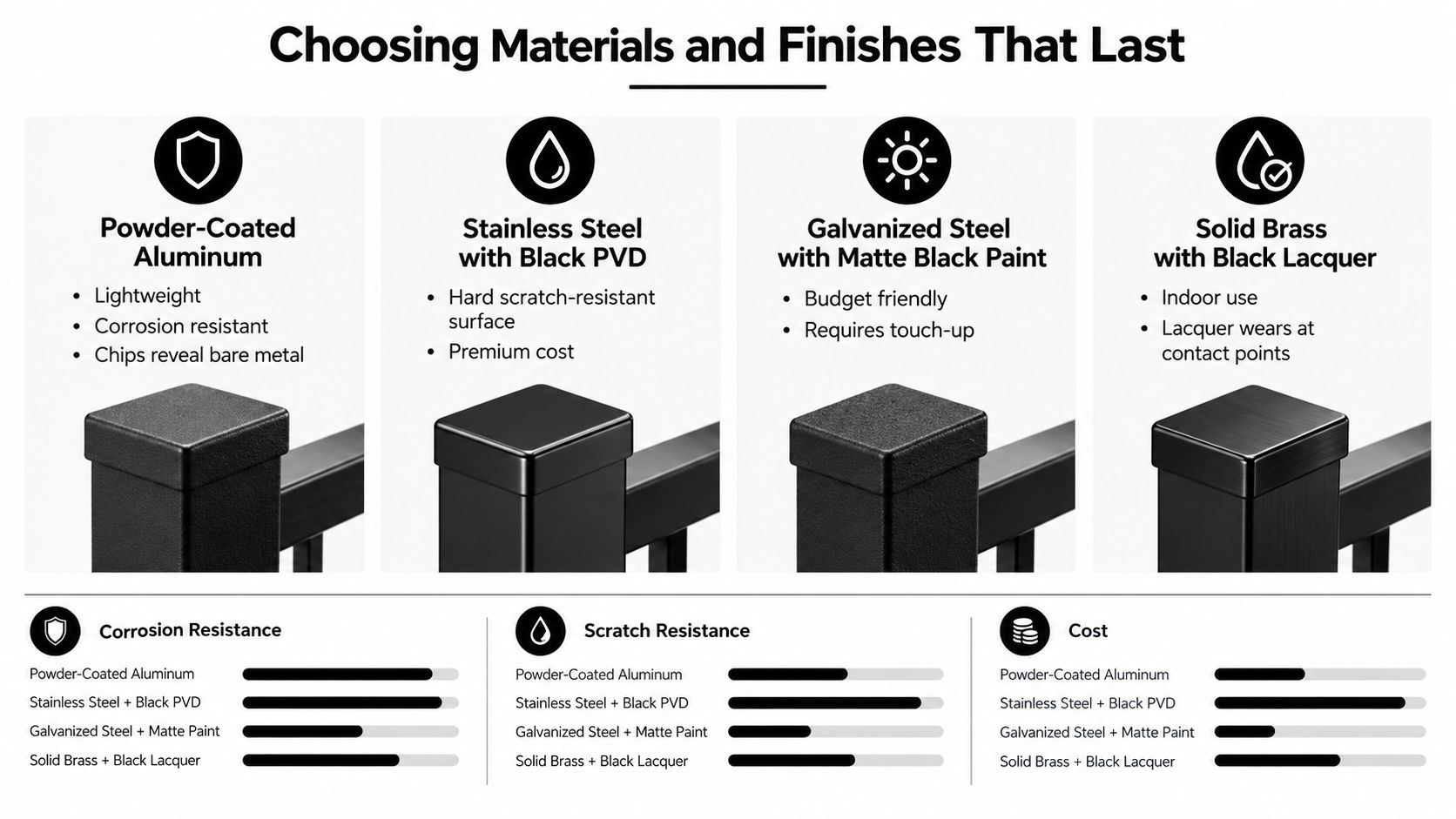
A supplier's exterior black handrail end-cap guidance recommends matching cap material and finish to the handrail tube and avoiding mixed grades. It also describes aluminum caps as resistant to UV brittleness and discoloration, and recommends Grade 316 for outdoor stainless systems. That is the detail many product pages skip.
- Powder-coated steel: Appropriate for compatible steel systems, but edge damage can expose the substrate.
- Anodized aluminum: Lightweight and suitable for outdoor use when the rail and cap are specified as one system.
- Grade 316 stainless: A sound choice for coastal, humid, or poolside exposure, especially when the finish is designed for exterior service.
The failure pattern is familiar. A lower-grade cap is fitted to a better rail, moisture collects at the joint, and staining appears at the termination first. The cap may still look acceptable from a distance, but the finish has already become the weak link. If you're comparing complete black railing styles, black metal deck railing options can help you assess the handrail and fittings as a coordinated finish rather than separate purchases.
Installing End Caps for a Clean and Safe Termination
A neat installation starts before the cap reaches the tube. Inspect the cut with a square or straightedge. If the end is angled, the cap will sit at an angle, and no amount of adhesive will make that look correct. Remove burrs from both the outside and inside edge so the cap doesn't catch, split, or stop short during insertion.
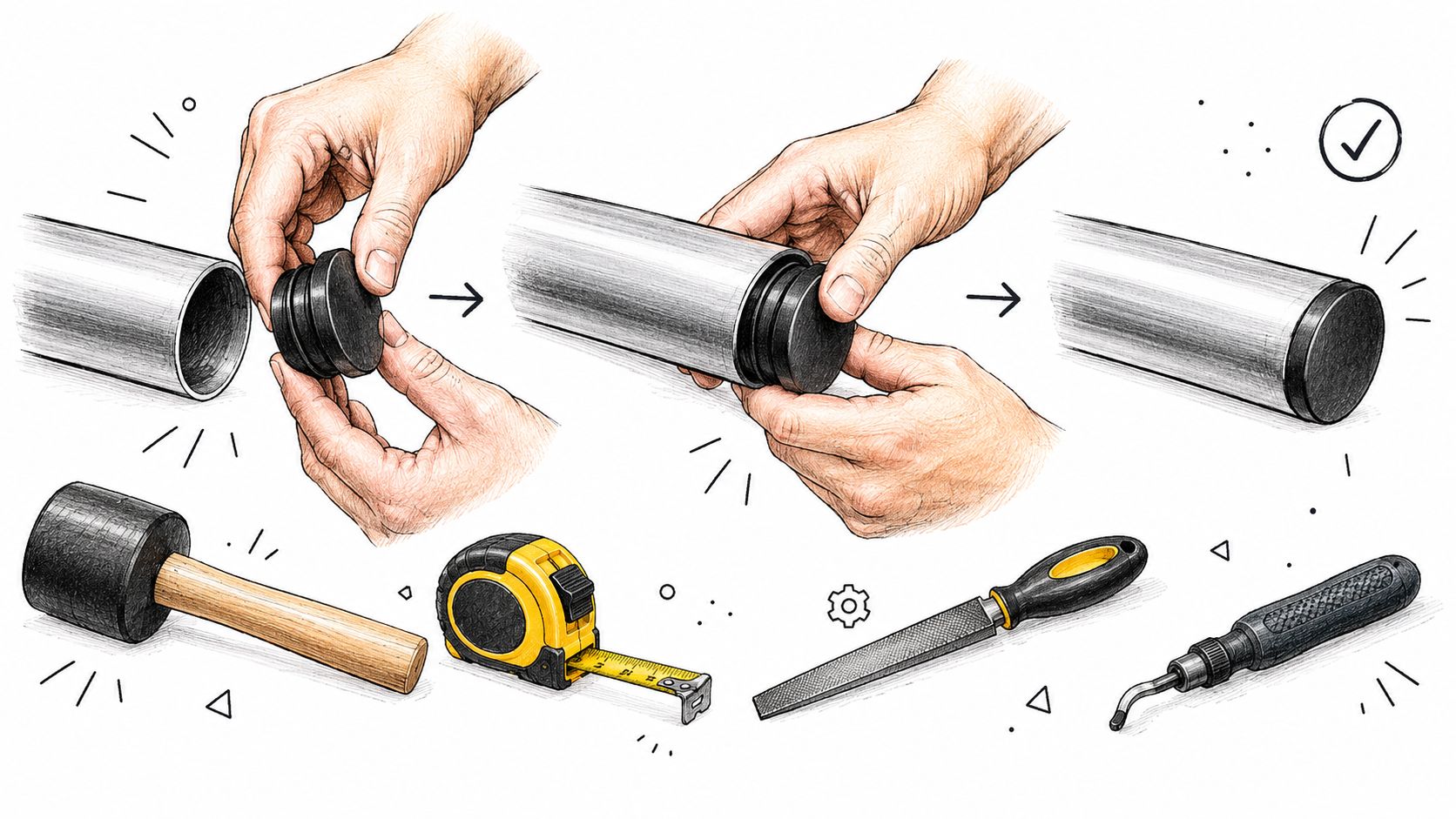
Clean the mating surfaces according to the cap and adhesive manufacturer's instructions. Dry-fit every cap first. Check that the shoulder sits evenly against the tube, the visible face is aligned, and the cap doesn't rotate or project beyond the intended profile. This test is where you catch the common problems, including an out-of-square cut, excess coating, wrong internal size, or an end cap intended for another tube shape.
Secure the termination without damaging the finish
Use adhesive or mechanical retention only as specified for the product. Adhesive needs clean contact and enough seating depth. A mechanically retained cap needs the correct pilot-hole approach, fastener position, and alignment. Skipping pilot holes can distort thin tubing or damage the finish, while fastening a cap before checking its orientation can leave a crooked visible face.
Installation guidance for comparable railing systems calls for an end cap at every open handrail termination, with a tight seat confirmed before final checks. The secondary handrail installation manual also identifies poor alignment, skipped pilot holes, and failure to check local code as common installation errors. Follow the specific instructions supplied with the cap, because retention details vary between products.
After the cap is secured, inspect the complete termination from the side and from the user's approach. Run a clean hand over the transition, without forcing contact against a sharp edge. Confirm that the cap doesn't obstruct travel, create a snag point, or interfere with continuous graspability. For a stair or egress handrail, verify the local code requirements before the final fastening check, not after a building inspector identifies the problem.
The finishing coat should cover the complete assembly when the system calls for it. A continuous finish protects the cut edge and avoids a visible ring where the cap and tube meet. Don't paint over a dirty joint or use coating to hide a cap that doesn't fit. Preparation determines whether the result lasts.
Use this end-cap guidance for railing systems alongside the manufacturer's instructions when planning the final termination. A short visual reminder can also help installers keep the preparation sequence in view:
Low-Maintenance Care for Black Metal Railings
Black metal is easy to live with when the cleaning method is gentle and consistent. Dust, salt residue, hand oils, and pool chemicals can collect around the end cap shoulder, where the tube and cap meet. Rinse exterior railings with clean water, then use a soft cloth or sponge with mild soapy water. Dry the joint afterward so standing moisture doesn't remain at the termination.
Abrasive pads, wire brushes, and aggressive solvents create fine scratches that may be invisible at first. Those scratches catch dirt and weaken the appearance of a matte or satin black finish. Don't treat a powder-coated or anodized surface like bare steel that can be scrubbed back into shape.
Inspect the edge before the damage spreads
Look closely at the cap and adjacent tube during ordinary cleaning. Chalking, edge wear, bubbling, color change, and rust-colored staining deserve attention. A small mark can sometimes receive a compatible touch-up, but the repair should follow the finish manufacturer's preparation and color guidance. A touch-up isn't a substitute for replacing a cap that has cracked, loosened, or lost its weather seal.
Coastal air requires more frequent rinsing than a sheltered interior stair. The corrosion guidance cited earlier reports steel exposure can be much harsher near the coast, and powder coatings can visibly degrade sooner in those conditions. Poolside and high-humidity installations also need attention at joints, because trapped moisture and incompatible metals often show their first symptoms around the termination.
- Interior railings: Remove dust and fingerprints with a soft cloth and mild cleaner.
- Exterior railings: Rinse away airborne residue, wash gently, and dry the cap joint.
- Damaged caps: Replace loose, cracked, badly stained, or heavily abraded parts instead of masking the failure.
Keep replacement caps consistent with the original tube material and finish. A new cap in a slightly different black can make the repair more noticeable than the original damage, while a mixed-grade replacement can restart the corrosion problem. Maintenance works best when it protects the complete assembly rather than focusing only on the most visible face.
Quick Guidance for Common Black Railing Decisions
Choose the cap from the environment outward. An interior stair may allow more finish flexibility, while an exposed deck, balcony, pool surround, or coastal installation needs a sealed, compatible exterior specification. Price matters, but a cheaper cap is false economy if it doesn't fit the tube or introduces a weak material at the most exposed edge.
For a retrofit, measure the existing handrail before browsing styles. For a new build, use the fabrication drawing as a starting point and confirm the finished tube before ordering. A domed profile can soften the termination, while a flat cap gives a quieter minimalist appearance. Either style still needs safe projection, secure seating, and code review.
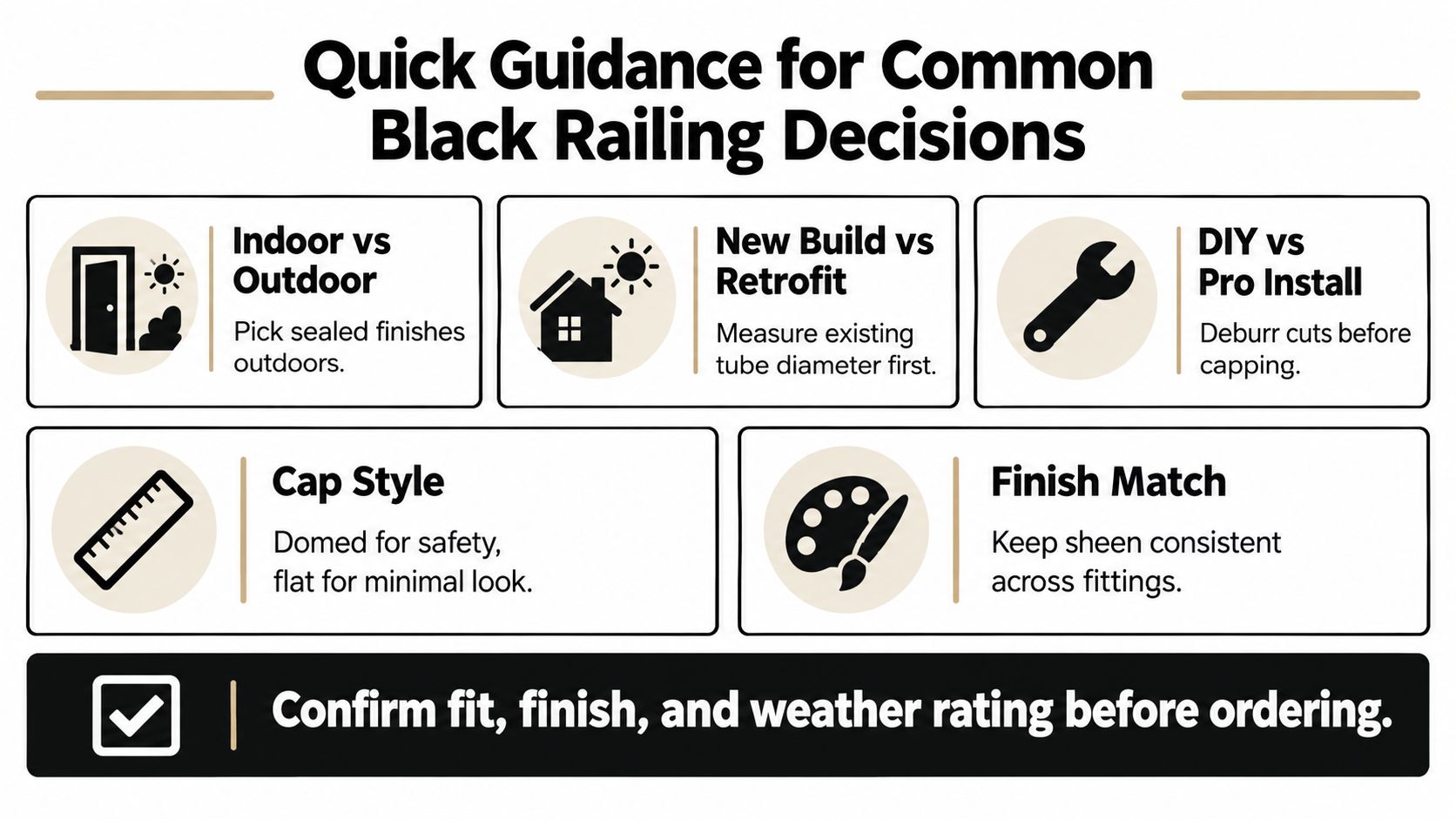
Use this decision check before you commit:
- Confirm the profile: Match the cap to the actual round, square, rectangular, or dowel tube.
- Match the material: Keep cap, rail, and fittings compatible, especially outdoors.
- Check the finish: Compare sheen and verify the finish suits the exposure.
- Prepare the cut: Square the tube, deburr the edge, and dry-fit the cap.
- Review the termination: Check local code, graspability, projection, and snag hazards.
- Plan care: Know how the finish will be cleaned and what damage requires replacement.
A smooth-looking cap is usually the cleanest choice, but visible retention hardware can be acceptable when it's aligned, specified for the system, and protected against corrosion. The cap is the last line of defense for the open tube, so it should pass the same fit, finish, and safety checks as every other railing component.
Ultra Modern Rails supplies factory-direct modern cable railing systems with black handrail components for residential and commercial applications, including deck, stair, side-mounted, and corner configurations. Visit Ultra Modern Rails to request a custom quote and drawing, then confirm the handrail profile, finish, and end-cap details before ordering.