

You're standing at the bottom of a set of patio stairs, looking at a clean concrete run that leads to the yard. The steps work, but the edge feels exposed, the handhold is missing, and the railing options seem endless. Glass, wood, aluminum, cable, and traditional metal systems can all look right in a catalog. Only some will suit the stair structure, local code, climate, and the way people use the space.
A modern railing for outdoor stairs is more than a visual finish. It's a graspable handrail, fall-prevention guard, structural frame, and weather-exposed assembly working together. The right choice begins with measured stair geometry and a clear understanding of the mounting surface. Appearance comes after those decisions, not before them.
Table of Contents
- Choosing the Right Modern Railing for Outdoor Stairs
- Understanding Building Codes and Safety Requirements
- Comparing Materials, Stainless Steel Cable, Glass, and Aluminum
- Installation Mechanics and Mounting Considerations
- Ensuring Durability and Long-Term Maintenance
- Selecting the Best System for Your Project
- Conclusion, Building Safe and Stylish Outdoor Spaces
Choosing the Right Modern Railing for Outdoor Stairs
Start by documenting the stairs as they exist. Measure the width, tread depth, riser height, slope, total rise, and the distance from any open edge to the grade below. Photograph the stringers, deck framing, concrete edges, or masonry where posts may attach. A railing supplier can design around accurate information, but no finish can compensate for weak framing or uncertain dimensions.
The next decision is whether you need a handrail, a guard, or both. A handrail gives a person a continuous surface to grip while moving along the stairs. A guard blocks an open side where a fall could occur. Cable infill may form part of a guard, but a thin cable isn't automatically a usable handrail. That distinction affects the top-rail profile, post layout, and how the system connects to the stair.
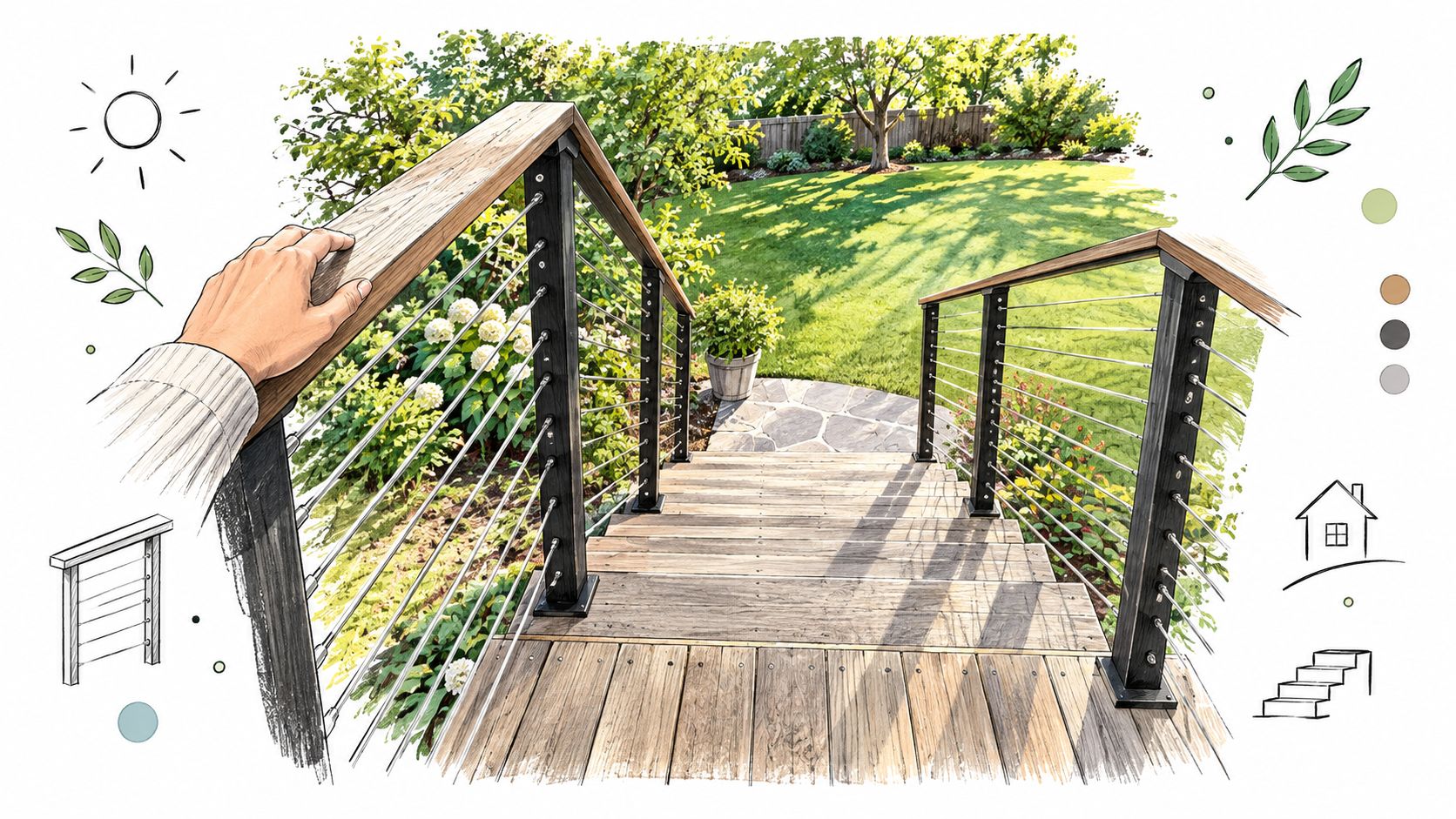
Match the system to the site
Choose the material after assessing exposure and maintenance access.
- Open views: Cable systems preserve sightlines with a restrained visual profile.
- High splash or impact areas: Solid panels or closely spaced vertical elements may be easier to keep clean and inspect.
- Coastal or poolside locations: Specify corrosion-resistant components and avoid careless contact between dissimilar metals.
- Wood stairs: Confirm that posts can reach structural framing, not just decking or trim.
- Concrete stairs: Plan anchors, edge distances, drilling, and drainage before ordering hardware.
A good design also accounts for lighting, wet treads, snow, leaves, and the path people take when carrying groceries or stepping down at night. The most attractive railing fails as a safety system if the handrail ends abruptly, the treads become slippery, or the posts flex under use.
Practical rule: Treat the stairs, handrail, guard, surface, lighting, and maintenance plan as one system.
Understanding Building Codes and Safety Requirements
Building code determines the basic geometry before you choose a profile or finish. Under the 2018 International Residential Code, stairs with four or more risers require a graspable handrail on at least one side. The handrail must remain continuous over the stair flight and sit 34 to 38 inches above the tread nosings, as stated in this IRC stair requirements guide.
The same code identifies minimum stair dimensions, including treads of at least 10 inches, risers no higher than 7 3/4 inches, and a minimum stairway width of 36 inches, all covered in that guide. These measurements aren't decorative preferences. They control how a person places a foot, reaches for support, and moves down the flight.
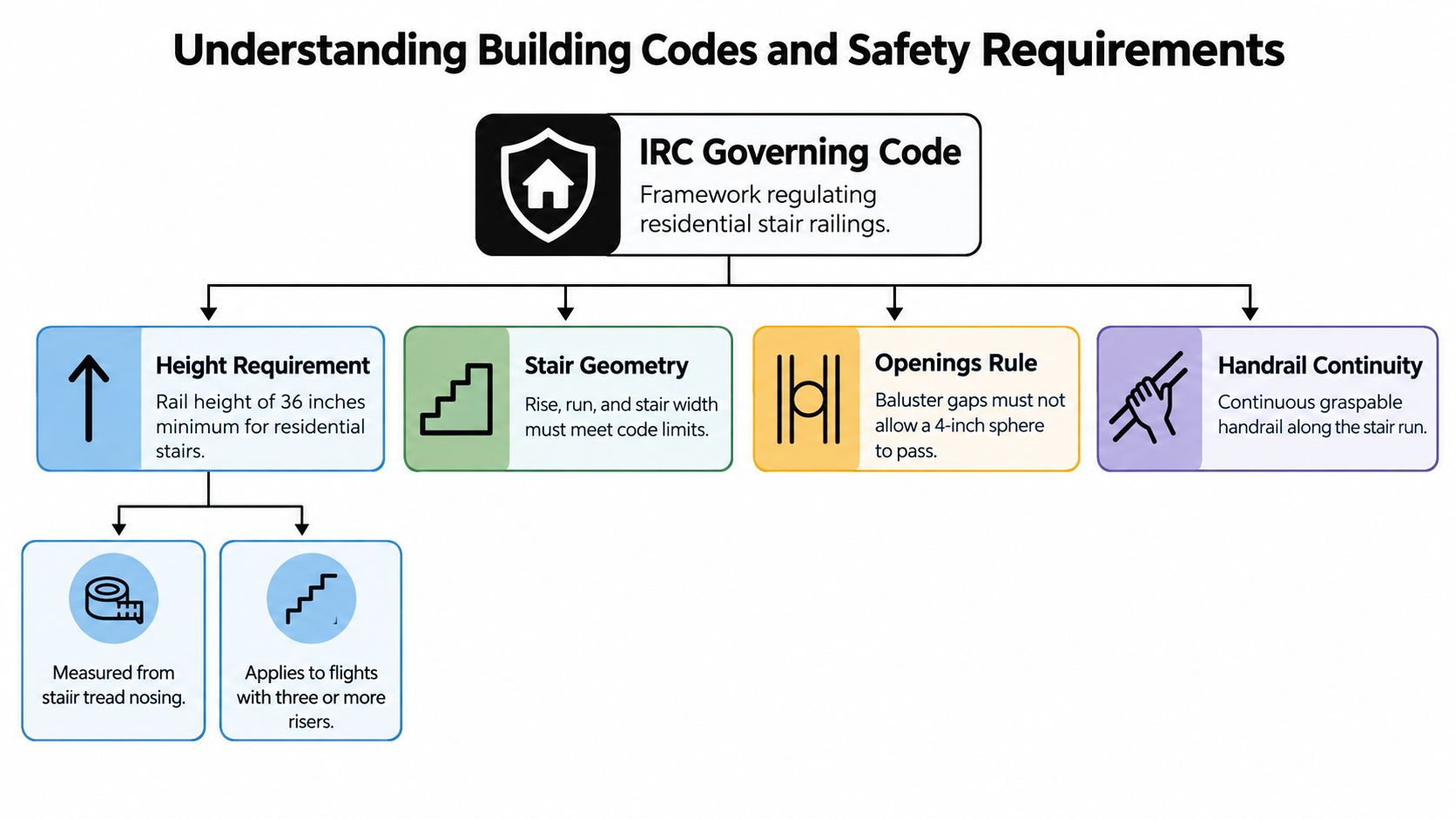
Handrails and guards do different jobs
An open side more than 30 inches above the floor or grade below generally requires a guard under the 2018 IRC guide. Stair guards are generally at least 34 inches high, while guards on raised decks, balconies, porches, and similar walking surfaces generally reach 36 inches. Typical guard openings must prevent a 4 3/8-inch sphere from passing through.
That means a cable layout must be checked against the actual stair slope and guard geometry. The cables, posts, top rail, and lower members can't be selected independently, especially where a triangular opening forms between a tread, riser, and lower guard element.
The 2024 IRC framework also identifies a 4-inch sphere limitation for typical residential guard openings, a 6-inch sphere limitation for the triangular stair opening, and a 200-pound concentrated load at the top of residential guard posts, as summarized by Jaspector's 2024 IRC guard requirements. Local jurisdictions may amend model codes, so confirm the adopted rules before fabrication.
Comparing Materials, Stainless Steel Cable, Glass, and Aluminum
Material choice changes more than appearance. It affects sightlines, cleaning, impact behavior, corrosion exposure, repair access, and the way loads reach the stair framing. Cable, glass, and aluminum can all work outdoors, but they solve different problems.
| Material | View Impact | Maintenance Level | Durability |
|---|---|---|---|
| Stainless steel cable | Very open, with thin horizontal lines | Moderate, including cleaning and tension checks | Strong outdoor performance when correctly specified and maintained |
| Frameless glass | Broad, unobstructed view with a heavier visual plane | Higher, because water spots, dirt, and fingerprints remain visible | Durable when properly supported, but panels and fittings need careful inspection |
| Powder-coated aluminum | Clean, lighter appearance with more visible framing | Generally moderate and finish-dependent | Resists rust, though coating damage and fastener details still matter |
Stainless steel cable
Cable railing suits stairs where the views should remain visible. It can create a light architectural edge around a garden, pool, mountain view, or contemporary deck. The trade-off is mechanical precision. Cables need compatible fittings, properly anchored posts, consistent spacing, and a top rail that people can grip.
Cable also makes structural mistakes less forgiving. Long spans and too few posts can increase deflection and place greater force on end posts and fasteners. A visually minimal system still needs substantial framing behind it.
Glass and aluminum
Glass creates a more solid barrier and can feel premium, but it shows dust, mineral deposits, rain marks, and fingerprints more readily than cable. Cleaning access matters on stair runs, particularly where panels sit close to walls, planting beds, or grade.
Aluminum is light and available in many coated finishes. It can be practical where weight or installation speed matters, but the profile may look less delicate than tensioned cable. For a closer look at the design and maintenance trade-offs of exterior glass, see this guide to outdoor glass railing.
Installation Mechanics and Mounting Considerations
A cable railing installation starts with structure, not cable. Mark every post location against the stair stringer, rim framing, concrete edge, or steel support. Surface decking, thin fascia, and decorative trim aren't reliable anchors unless they connect to the structural member beneath.

Build the frame before tensioning
Posts must stand plumb on level sections and follow the stair pitch where the system is designed for a stair run. Check clearances around brackets, handrail returns, walls, and adjacent walking surfaces before drilling. On concrete, confirm anchor type and edge conditions. On wood, use bolts or structural fasteners that pass into verified framing rather than relying on short screws in the surface board.
After the posts are fixed, install the cable fittings and run the cable through the complete line. Don't fully tighten one cable while leaving the others loose. Work progressively through the system so tension distributes evenly and the posts don't get pulled out of alignment.
A hydraulic tensioning tool can help achieve consistent tension, but it isn't a substitute for correct post spacing, sound anchors, or manufacturer instructions. Leave enough cable for routing, fitting, and adjustment. Ordering extra material for waste is sensible, but the exact allowance depends on the layout and supplier's cutting method.
For a more detailed installation reference, review this guide to outdoor stair railing installation.
The following video shows the type of stair cable assembly and fitting sequence installers commonly need to understand before beginning:
Finish by checking every connection by hand, inspecting cable alignment, and confirming that the top rail remains continuous and comfortable to grip. If the structure moves when a person leans on it, stop and correct the mounting before adjusting cable tension.
Ensuring Durability and Long-Term Maintenance
Outdoor railings face moisture, ultraviolet exposure, freeze-thaw movement, airborne pollutants, dirt, and accidental impact. Material selection matters, but so does the relationship between the finish, fasteners, anchors, cables, and supporting substrate.
Stainless steel is often selected for exterior cable systems because it resists corrosion without requiring a painted surface. The correct grade still depends on exposure. Coastal spray, chlorinated pool environments, industrial pollutants, and sheltered damp areas can create different corrosion conditions, so “stainless” alone isn't a complete specification.
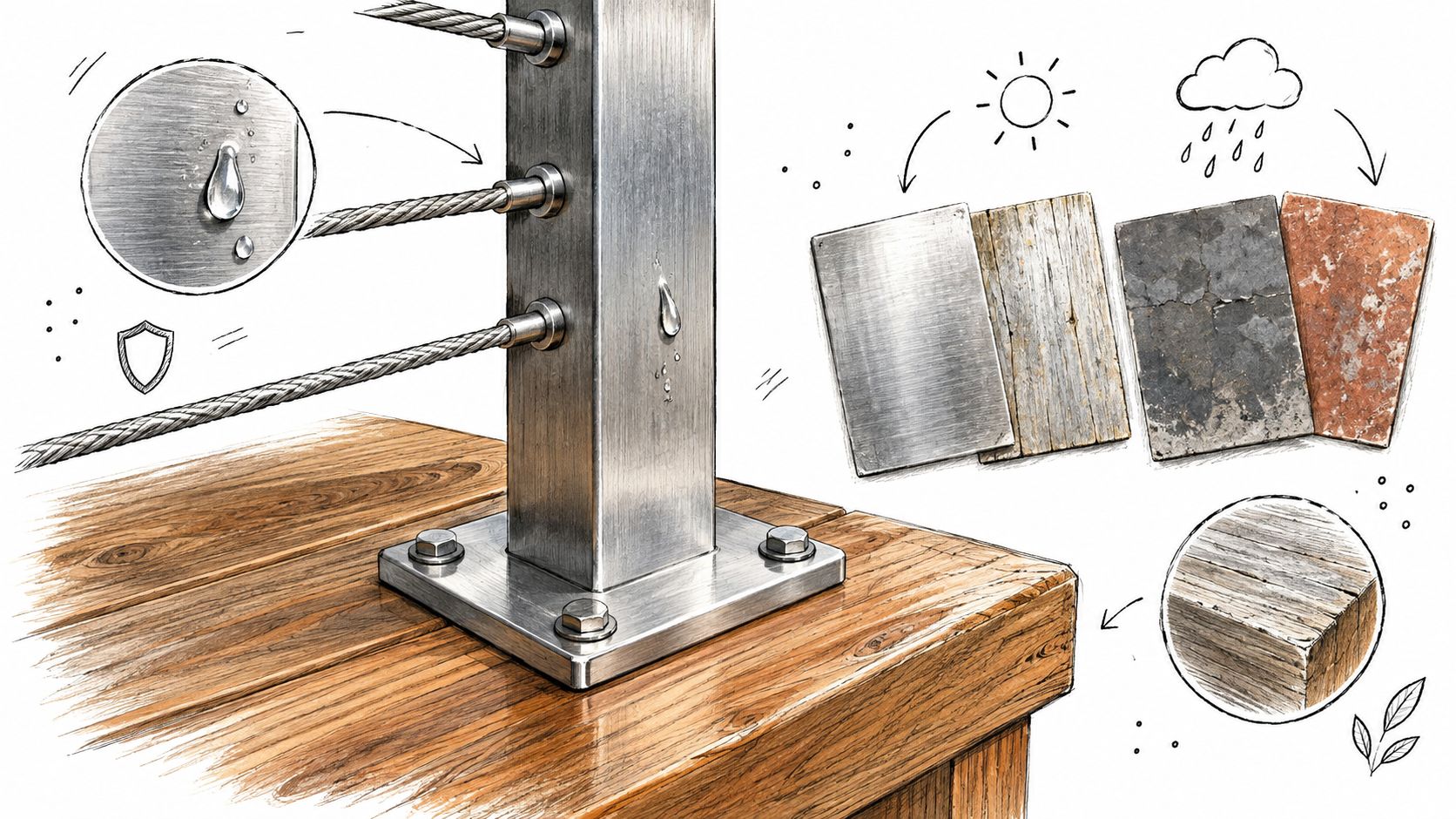
Inspect the parts people overlook
A railing can look clean while its critical connections deteriorate. Include these checks in the maintenance routine:
- Posts and fasteners: Look for movement, staining around connections, cracked concrete, split wood, or water collecting at the base.
- Cable condition: Check for fraying, loosened fittings, unusual sag, or changed tension.
- Surface finish: Remove dirt, pollen, salt, and hard-water deposits before they remain on the metal.
- Handrail joints: Confirm that returns, splices, and end caps haven't loosened or developed sharp edges.
- Drainage paths: Keep debris from trapping moisture around post bases and stair edges.
Tea staining, pitting, loose fasteners, and a noticeable change in cable tension deserve attention rather than cosmetic cleaning. Dissimilar metals also need careful detailing because direct contact in a wet environment can accelerate galvanic corrosion. Use compatible fittings, isolate metals where appropriate, and follow the system manufacturer's cleaning guidance.
A practical maintenance reference is this guide to cleaning and maintaining cable railings. In harsh locations, inspect more often and schedule checks after severe weather, construction nearby, or any impact to the railing.
Selecting the Best System for Your Project
The right system begins with the project constraint that matters most. A homeowner protecting a wooded view may prioritize visual openness. A hospitality manager may care more about repeatable cleaning and quick inspection. A contractor may focus on structural mounting, lead times, field adjustment, and whether the drawings clearly show every component.
Use a short decision sequence:
- Confirm the governing code. Ask the local building department which code and amendments apply.
- Verify the substrate. Identify the framing, concrete, masonry, or steel that will carry post loads.
- Define the handrail. Select a continuous, graspable rail rather than assuming the cable or guard cap will satisfy that role.
- Assess exposure. Note salt, chlorine, rain, snow, freeze-thaw movement, and cleaning access.
- Choose the visual language. Compare cable, glass, aluminum, wood, or a hybrid system against the architecture.
- Request drawings before ordering. The layout should show post positions, stair angles, rail heights, fittings, anchors, and transitions.
Factory-direct custom systems can simplify specification when the supplier provides drawings and adapts sections to the measured project. Ultra Modern Rails supplies custom stainless steel and black metal cable railing systems, with options for sections, handrails, mounting styles, and wood tops, and offers a free custom quote and drawing.
Budget for the complete assembly, not only the visible infill. Posts, top rails, fittings, anchors, delivery, field tools, finishing, and future maintenance all affect the total cost. The least expensive kit isn't a saving if the installer must redesign the structure or replace corroded hardware later.
Conclusion, Building Safe and Stylish Outdoor Spaces
A successful outdoor stair railing disappears into daily use. People reach for it without thinking, the guard feels solid, the view remains open, and the finish still looks deliberate after exposure to weather. That result comes from decisions made before installation, including measured stair geometry, verified anchorage, a usable handrail, suitable guard openings, and a maintenance plan.
The common failure is choosing the visual product first and trying to force the stairs to accept it. A better sequence is to inspect the structure, confirm local code, separate the handrail function from the guard function, assess the climate, and then compare cable, glass, aluminum, wood, or hybrid options. The CDC's analysis of occupational stair incidents found that 636 of 688 cases with a known travel direction occurred while workers were descending, or 92%, as reported in the CDC stair accident analysis. That finding reinforces why a continuous, comfortable grip and predictable stair environment matter most where users are moving downward.
Don't stop at the railing. Pair it with slip-resistant treads, effective drainage, useful lighting, and a plan for snow, ice, leaves, or pool water. Guidance assessing residential and community stairs found widespread gaps in non-slip finishes and edging, and it recommends lighting controls at both the top and bottom of a stairway, as documented in this outdoor stair safety guidance.
Before ordering, send the supplier measured drawings, photographs of the substrate, stair dimensions, exposure conditions, and your local code requirements. That information gives the fabricator a real basis for designing a modern railing for outdoor stairs that looks refined and performs as a safety system.
Ultra Modern Rails provides custom cable railing systems for residential and commercial stairs, with stainless steel and black metal options, configurable handrails, mounting styles, and wood tops. Visit Ultra Modern Rails to request a project-specific quote and drawing before you order.