

You've noticed the problem halfway through a renovation. The steps are finished, the deck looks good, and the old outside stair railings are either loose, corroded, or missing altogether. A replacement may look simple, but outdoor railings live through rain, frost, sunlight, salt, dirt, and repeated loading. The design that looks sharp on installation day isn't necessarily the one that stays safe after years of weather.
A durable system starts with more than rail style. You need the right material, sound anchorage, code-compliant geometry, compatible hardware, and a maintenance routine that catches small failures before they become structural problems.
Table of Contents
- Why Outdoor Stair Railings Face Unique Challenges
- Comparing Materials for Outdoor Durability
- Understanding Building Codes and Safety Standards
- Choosing Hardware for Weather Resistance
- Balancing Aesthetics with Practicality
- Long-Term Maintenance and Care
Why Outdoor Stair Railings Face Unique Challenges
An indoor railing usually has a controlled environment. An exterior system doesn't. Water enters joints, sunlight breaks down finishes, temperatures move materials at different rates, and ice can turn a small drainage problem into a persistent source of corrosion. Every wet-dry cycle tests the coating, fasteners, posts, and connections.
The most common failure I see isn't a rail snapping in the middle. It's a connection beginning to move. A post loosens where it meets concrete, a fastener corrodes inside a damp joint, or a wood member holds moisture around an end cut. The railing may still look acceptable from a distance, but the hand pressure that once felt solid becomes a noticeable wobble.
Water is the first thing to control
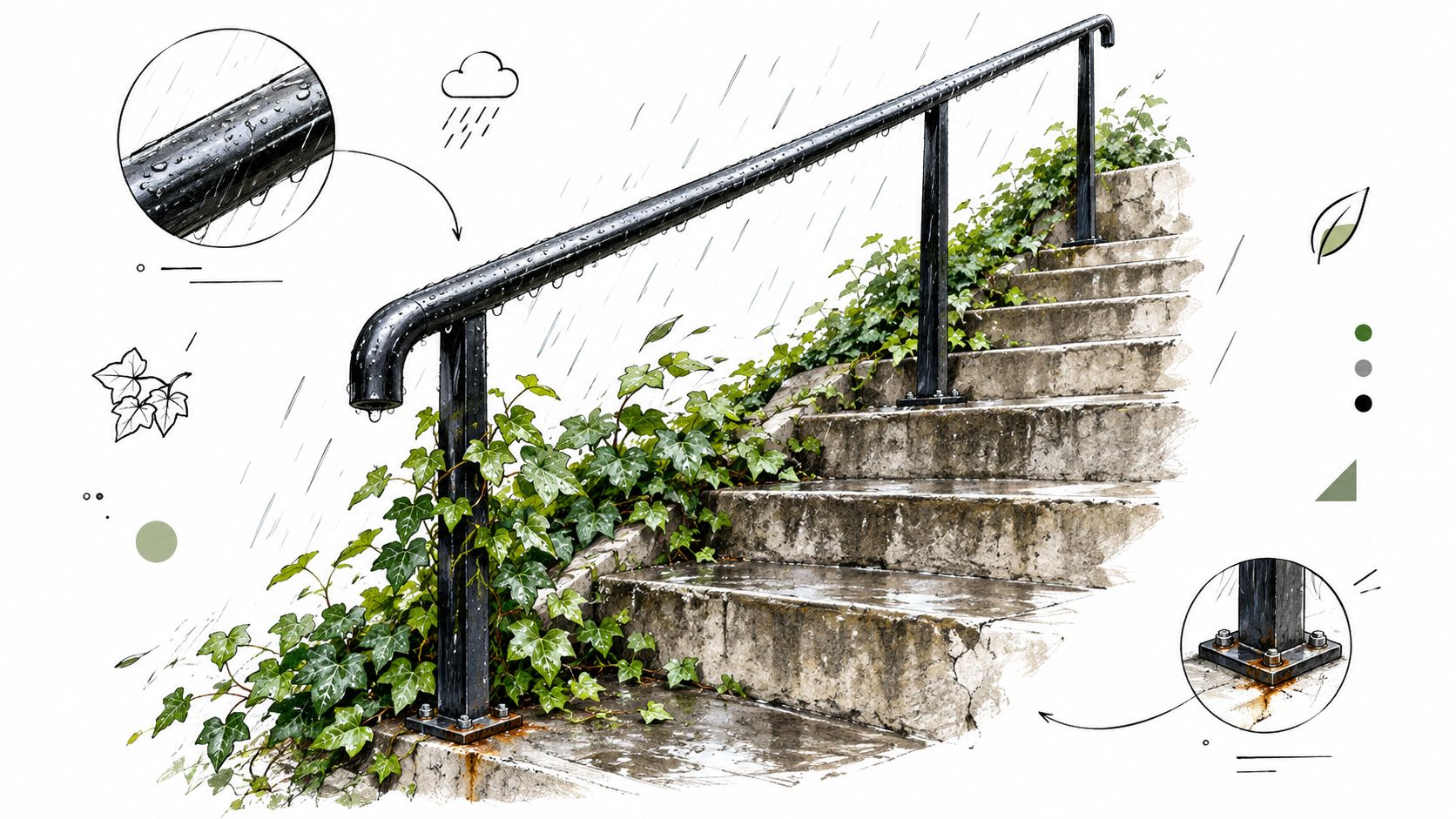
Rain itself isn't always the main threat. Trapped water is. Flat surfaces, unsealed end grain, poorly drained sleeves, and dissimilar metals that hold moisture together create conditions for rust, staining, rot, and freeze damage.
A good installation gives water somewhere to go. Posts should not sit in puddles, horizontal surfaces should shed water, and penetrations through decks or landings should be sealed without trapping moisture inside the assembly. On concrete, the installer must also verify that the anchor type suits the substrate instead of assuming every screw will hold.
Movement exposes weak work
Outdoor railings expand and contract as temperatures change. Cable systems also depend on correct tension, so movement at a post or fitting can show up as sagging or a rail that no longer feels uniform. Wood can swell, shrink, twist, and split around fasteners. Glass doesn't rust or rot, but its supporting clamps and channels still face the same weather.
Practical rule: Choose a railing by asking how its joints, anchors, finish, and drainage will behave after years outside, not just how the material looks in a showroom.
Codes treat railings as life-safety components for good reason. In one engineering analysis, 75% of investigated stair falls began where no handrail was present, while another study attributed 16% of stair accidents to missing handrails (Ottawa Public Health's older-adult safety survey and referenced injury research). That evidence doesn't tell you which finish to buy, but it does establish the priority: weather resistance matters because a neglected railing can stop functioning when someone needs it most.
Comparing Materials for Outdoor Durability
Material choice determines much of the maintenance burden, but no option is maintenance-free. Stainless steel cable, wood, and glass can all work outside when the design and installation match the site. They fail for different reasons.
| Material | Durability | Maintenance | Aesthetic |
|---|---|---|---|
| Stainless steel cable | Strong resistance to moisture-related deterioration when the cable, fittings, and anchors are correctly specified | Inspect tension, fittings, fasteners, and finish; clean away dirt and salt | Light, open, and contemporary |
| Wood | Can perform well when protected, but vulnerable to moisture, splitting, rot, and movement | Requires cleaning, sealing, staining, and attention to damaged areas | Warm, traditional, and adaptable |
| Glass | The panel itself won't rust or rot, but edges, clamps, channels, and seals need care | Frequent cleaning and inspection for chips, scratches, movement, and buildup | Minimal, transparent, and view-preserving |
Stainless steel cable
Cable railing keeps sightlines open and places less visual weight on a stair. The material is a practical fit for projects where the railing needs to feel modern without creating a solid wall. The important distinction is between the visible cable and the entire system. A corrosion-resistant cable paired with unsuitable screws or low-grade fittings can still develop staining and weakness at the connections.
Before specifying a system, consider the site. Coastal air, road salt, heavy humidity, and sheltered damp corners place more demand on finish and hardware. This guide to stainless steel and steel corrosion is useful when comparing grades, surface conditions, and exposure risks.
Wood
Wood remains the easiest material to blend with a porch, cabin, or traditional home. It also gives you a comfortable handrail surface in cold weather. Its weakness is predictable: unprotected cuts and horizontal surfaces absorb water, then move as they dry.
Wood works when the owner accepts a recurring care routine. It doesn't work when the expectation is “install it and forget it.” A cracked top rail, open end grain, or peeling finish should be dealt with before water reaches deeper into the member.
Glass
Glass provides excellent visibility and can make a narrow stair feel more open. It also shows every mark. Rain spots, pollen, salt, fingerprints, and mineral deposits quickly become visible, especially on a dark or highly reflective setting.
Glass panels need carefully designed support. The panel may remain intact while a clamp loosens, a channel collects grit, or a seal deteriorates. For exposed stairs, make sure the system offers a graspable handrail where required, and don't treat the clear infill as a substitute for a handrail just because it forms a barrier.
The best material is the one whose maintenance demands match the property. A remote vacation home may favor a lower-intervention metal system. A homeowner who enjoys seasonal upkeep may prefer wood. A high-visibility entrance may justify glass, provided cleaning and hardware inspections are built into the plan.
Understanding Building Codes and Safety Standards
A railing can look secure on installation day and still fail its safety role after years of rain, frost, and neglected connections. Code compliance starts by identifying what the assembly must do. A handrail gives a person a continuous, graspable surface while climbing or descending. A guard protects the open side of a stair, deck, or landing from a fall. One assembly may serve both purposes, but its graspable shape, height, continuity, and structural support must meet the rules that apply locally.
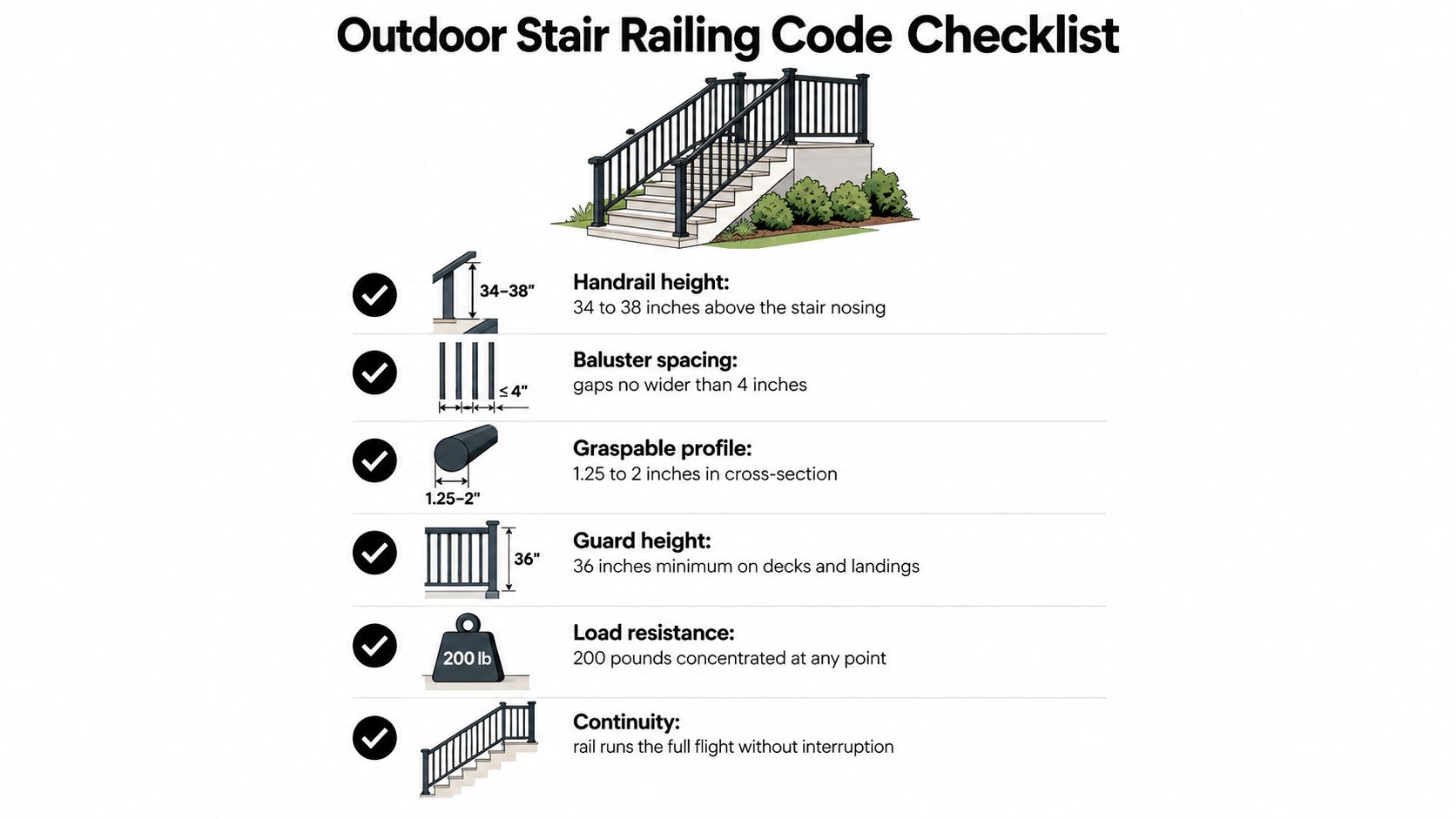
For many residential code pathways, outside stairs with four or more risers or more than 30 inches of vertical rise require at least one handrail. Handrails are commonly installed 34 to 38 inches above the stair nosing. Guards on decks or landings more than 30 inches above grade are typically at least 36 inches high (code requirements for exterior handrails). Local requirements can differ, so confirm the final design with the authority having jurisdiction before fabrication.
Handrails and guards answer different questions
Check the stair from two angles:
- Can a person reach and grasp the rail comfortably throughout the stair flight?
- Can someone fall through or over the open side?
Many guard conditions limit openings so a 4-inch sphere cannot pass through. That addresses entrapment and fall-through risk. Handrail height, profile, and continuity address balance and grip. The stair railing requirements guide helps organize these requirements before components are ordered, but it does not replace local approval.
A residential stair may require a handrail on one side, while an accessible or ADA-covered egress route can require handrails on both sides. A landing guard may also need a different height from the sloped handrail beside the stair. Applying one dimension across the entire project often creates rework.
Load resistance belongs in the design
Outdoor railings commonly need to resist a 200-pound concentrated load applied downward or outward near the top edge (Oregon OSHA railing guidance). That load reaches beyond the visible rail. Posts, anchors, brackets, fasteners, and supporting framing must all carry it. Weather makes this check more important because water can weaken timber, corrode connections, and loosen components long before the failure is obvious.
The U.S. Access Board stairway guidance addresses continuous handrails, placement, guards, and opening limitations. Measure from the stair nosing, inspect the full flight, and verify the substrate can carry the required loads. Confirm those details before choosing the finish or infill pattern.
Choosing Hardware for Weather Resistance
A railing system is only as durable as the parts that connect it to the building. Posts, brackets, clamps, turnbuckles, washers, screws, and anchors face the same weather as the rail, but they're often hidden from view. That makes hardware failure easy to miss until the assembly moves.
Match the hardware to the exposure
Use corrosion-resistant components throughout the exterior assembly. Mixing a durable visible rail with ordinary plated fasteners creates a weak point, particularly where water sits or where salt reaches the connection. In coastal and high-humidity locations, installers commonly consider 316 stainless steel because it offers better resistance to chloride exposure than 304 stainless steel. The right choice still depends on the product specification, environment, and local conditions.
Don't judge hardware by appearance alone. Check the grade, finish, compatibility with the rail and substrate, and whether the manufacturer approves it for exterior use. The stainless steel cable railing hardware guide provides a useful reference for matching fittings and tensioning components to a cable system.
Build the connection before tightening the rail
Start with the substrate. Concrete, masonry, pressure-treated wood, engineered decking, and steel framing each require different anchors or fasteners. A post mounted over a thin deck board without structural backing may feel firm during installation and still loosen under repeated loading.
Then inspect the path of every fastener. Keep water from collecting around penetrations, avoid crushing hollow sections, and use washers or backing plates where the design calls for them. On stairs, align posts so the rail follows a consistent slope without forcing fittings to work at an angle they weren't designed to handle.
Tension cable in stages
Cable systems need controlled tension, not brute force. Install the cable according to the system instructions, tension gradually across the run, and check that intermediate supports remain aligned. Over-tightening can transfer excessive force into posts and anchors, while under-tensioning leaves visible sag and a poor grasping experience.
Use a final inspection that includes more than a visual check:
- Test each post: Apply firm hand pressure in multiple directions and look for movement at the base.
- Inspect every fitting: Check threads, swages, turnbuckles, and washers for damage or corrosion.
- Verify the rail path: Confirm the handrail remains continuous and comfortable through the flight.
- Check drainage: Look for water trapped in sleeves, channels, caps, or horizontal joints.
Hardware selection isn't glamorous, but it determines whether the finished railing remains a structural system or becomes a collection of loose decorative parts.
Balancing Aesthetics with Practicality
A modern railing should make the stair feel clearer, not make safety features disappear. Open cable lines, slim metal posts, and glass infill can preserve a view, but the system still needs a substantial handrail, reliable anchors, and details that can be cleaned and inspected.
Start with the architecture
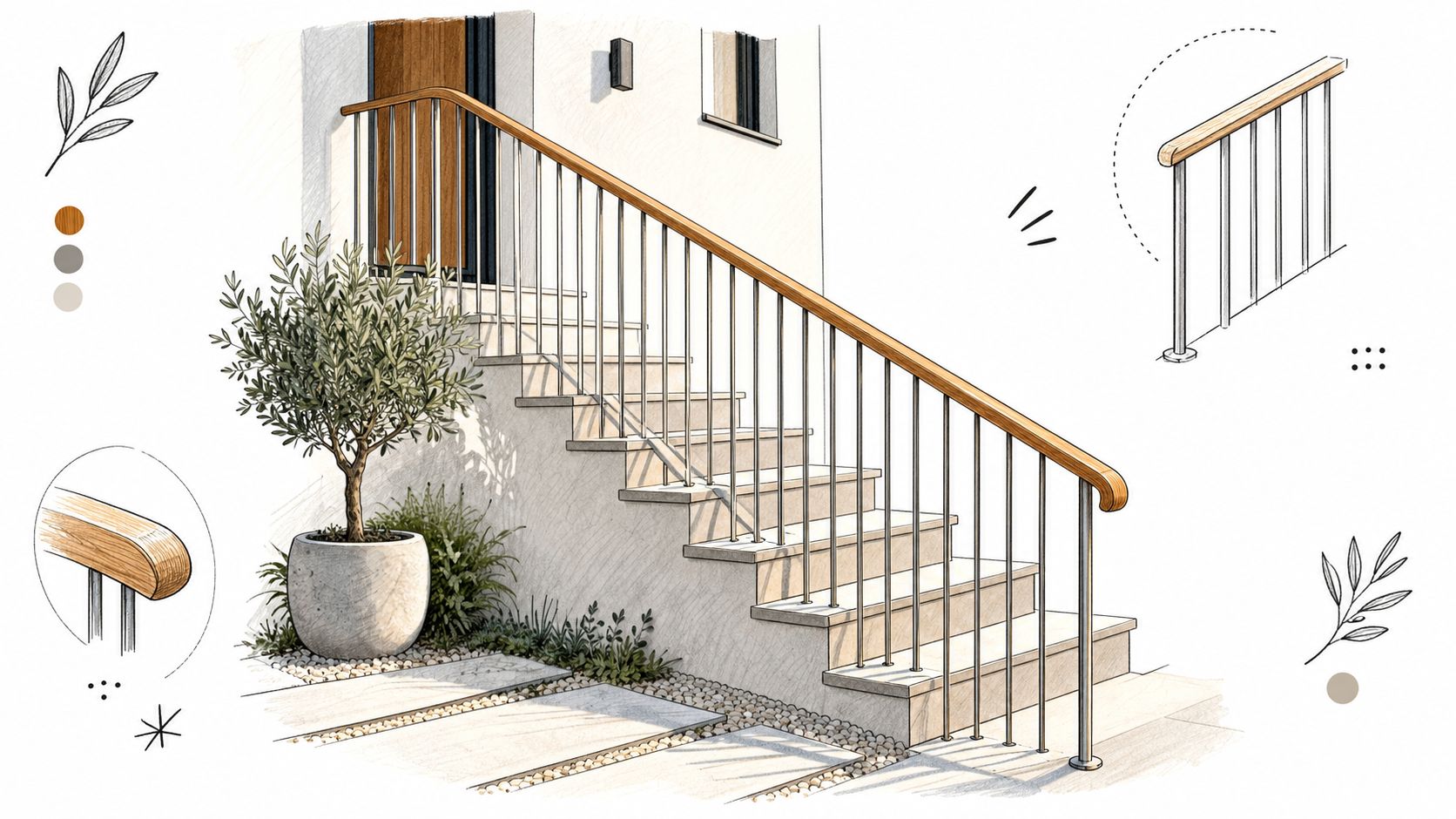
A black metal system often suits concrete, brick, and contemporary siding. A wood top rail can soften the appearance without sacrificing the clean lines of metal posts. Glass can work at a view-facing landing, while cable may be more practical along a stair where frequent hand contact and cleaning access matter.
The best combinations use each material where it performs well. Wood can provide warmth at the grip, stainless steel can handle exposed infill, and a durable coated frame can establish the visual structure. The mistake is choosing mixed materials only for contrast, then discovering that each one needs a different cleaning product, inspection method, and replacement schedule.
Keep the handrail visually obvious
A rail that blends perfectly into the background may look elegant in a rendering but be difficult to find in rain, low light, or winter clothing. Contrast, a consistent profile, and integrated lighting can improve usability without making the design bulky. Lighting should illuminate the treads and rail path without creating glare on glass or polished metal.
Cable systems maximize openness, but they need disciplined spacing, tension, and termination details. Frameless glass creates an uninterrupted view, but it can show dirt and water marks more readily and may require more frequent attention. Slim profiles are not a reason to minimize the structural members that hold them in place.
Design for the person who will maintain it
Leave access to fittings and anchors. Avoid details that force an owner to remove half the railing to clean a channel or inspect a post. Choose finishes that can be touched up, surfaces that drain, and components that can be replaced without dismantling the entire stair.
Ultra Modern Rails supplies factory-direct custom cable railing systems in stainless steel and black metal finishes for exterior stairs, decks, balconies, patios, pools, and commercial spaces. Its systems can be configured with different handrails, mounting styles, and wood tops, which makes it one option for combining a minimal appearance with site-specific structural and maintenance needs.
A clean visual line is valuable, but a cleanable and inspectable connection is more valuable.
Long-Term Maintenance and Care
A railing can look sound while weather works behind the finish, inside a fitting, or around an anchor. The systems that last are usually checked before a small defect becomes a major repair. Set a seasonal inspection routine based on the material and exposure. Walk the full stair and look for loose anchors, chipped coatings, water staining, splinters, damaged strands, and changed cable tension.
Start at the bottom, where grit and water collect. Follow every post to the handrail and infill. A gloved hand can find sharp edges or splinters, but it cannot confirm that a hidden connection is sound. Check fasteners, joints, brackets, and post bases visually as well.
Use a simple material-specific routine
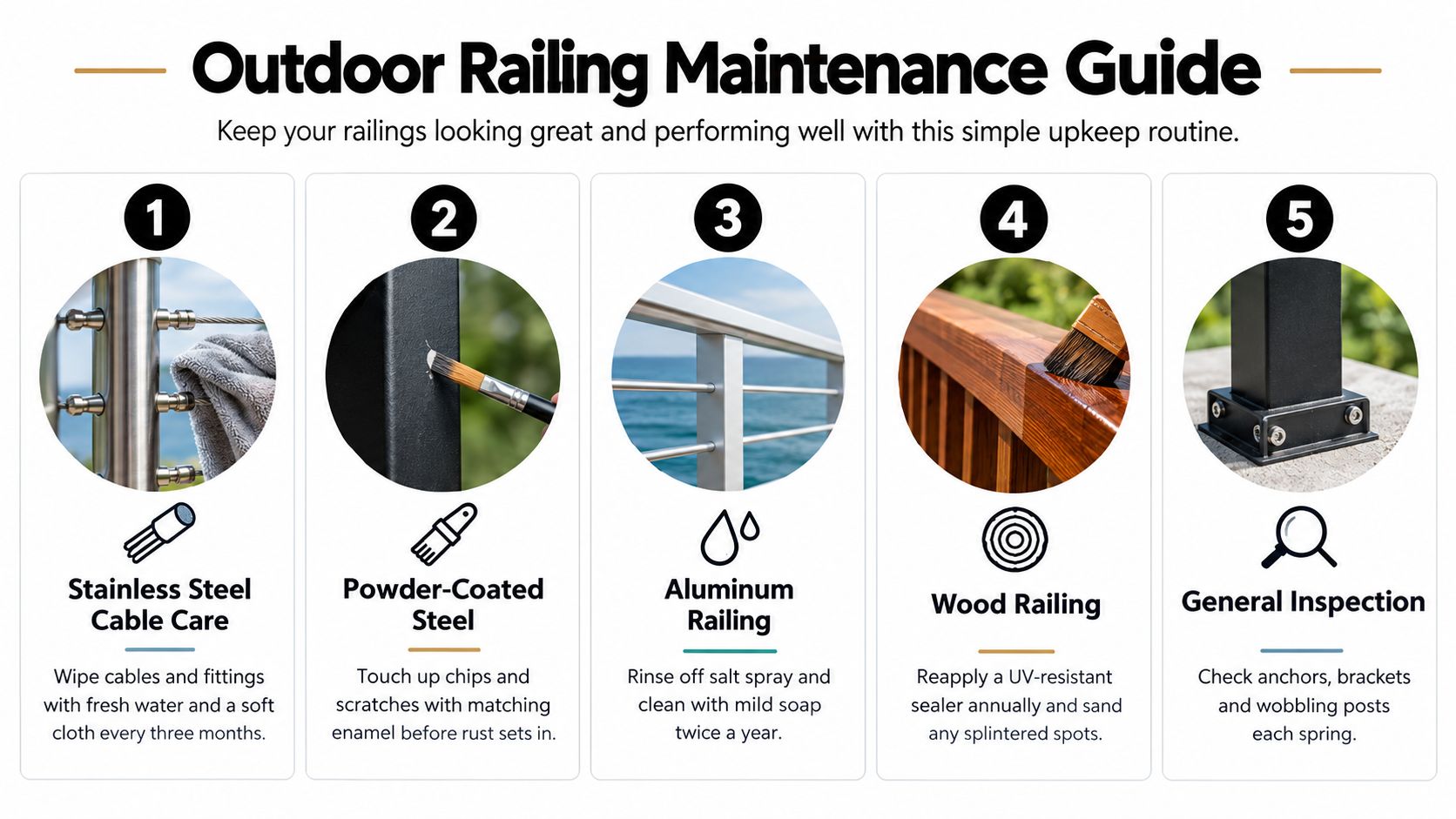
Stainless steel cable needs checks for sag, broken strands, loose terminals, and staining. Rinse away salt and dirt with fresh water, wipe with a soft cloth, and dry the fittings. Harsh cleaners and abrasive pads can scratch the surface, leaving places for contaminants to collect.
Powder-coated steel needs prompt repairs when the coating chips. Clean and dry the damaged area, then apply compatible touch-up enamel before exposed steel starts to rust. Pay close attention to brackets and post bases, where water can remain longest.
Aluminum generally needs rinsing and mild soap, particularly where salt spray or road residue settles. Test joints and fasteners for movement even if the finish still appears intact.
Wood deserves close inspection at end grain, joints, post bases, and the underside of the handrail. Sand splintered sections, replace compromised members, and renew a UV-resistant sealer before the wood begins absorbing water freely.
Glass calls for a non-abrasive product and cloth that will not damage the panel or nearby seals. Inspect edges, clamps, channels, and handrail supports for chips, looseness, grit, and trapped moisture.
Make spring the structural inspection
Spring is a useful time to check anchors, brackets, post movement, cable tension, guard openings, and drainage. Freeze and thaw cycles can expose weaknesses around concrete anchors, while winter moisture often reveals coating failures. A wobbly post is a connection problem, not a cosmetic blemish. Investigate it before the stair returns to normal use.
Injury research from the early 2000s documented tens of thousands of deck and stair injuries, including many involving railings. The figures are historical, but the maintenance lesson remains current. An outside stair railing supports a route people use in poor weather, low light, and daily traffic. It should not wait for the next renovation before someone checks it.
Durable outside stair railings depend on suitable materials, sound detailing, weather-resistant hardware, drainage, and access for future repairs. When replacing a worn system or planning a new stair, ask for a design that accounts for the substrate, exposure, connections, and inspection access. Ultra Modern Rails offers factory-direct custom cable railing systems in stainless steel and black metal finishes, with configurable handrails, mounting styles, and wood tops for exterior applications. Review the available options and request a project-specific quote and drawing.